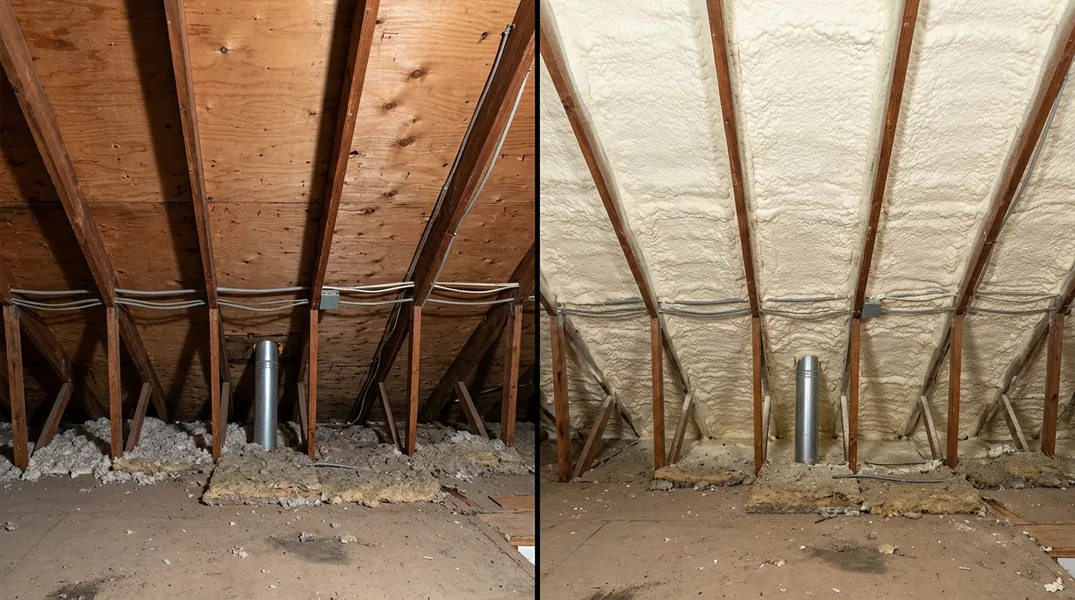
Understanding Spray Foam Insulation Types
When you're considering attic spray foam insulation for your Davenport home, one of the first decisions you'll face is choosing between open cell and closed cell spray foam. Both are effective insulation solutions, but they work differently and offer distinct advantages depending on your home's specific needs. Understanding the differences between these two types will help you make an informed decision that protects your home while maximizing energy efficiency and comfort.
Spray foam insulation has become increasingly popular in recent years because it seals air leaks better than traditional insulation materials like fiberglass or cellulose. When applied to your attic, spray foam expands to fill every crack, crevice, and gap, creating an air-tight barrier that significantly reduces heat loss in winter and heat gain in summer. However, the two main varieties of spray foam differ in their chemical composition, performance characteristics, and suitability for different applications. Knowing these distinctions is essential before you invest in upgrading your home's thermal envelope.
What Is Open Cell Spray Foam Insulation?
Open Cell Spray Foam Insulation is a lighter, more flexible type of spray foam that contains cells without a complete outer shell. This structure means the cells are open to each other, allowing moisture and air to pass through the material. Open cell foam typically has a lower density (around 0.5 pounds per cubic foot) and is softer to the touch compared to its closed cell counterpart. Because of its porous nature, open cell foam is an excellent sound dampener and provides good thermal insulation while remaining more affordable than closed cell options.
One of the key benefits of open cell foam is its vapor permeability. This characteristic makes it suitable for applications where moisture management is important. In attic applications, open cell foam allows water vapor to pass through, which can be advantageous in certain climates and building designs. The material is also easier to cut and work with during installation, which can help reduce labor costs. For homeowners in Davenport looking for a cost-effective insulation solution with good thermal performance, open cell foam often represents an attractive option. However, because it's permeable to moisture, it requires proper ventilation and may not be ideal in areas prone to high humidity or water intrusion.
What Is Closed Cell Spray Foam Insulation?
Closed Cell Spray Foam Insulation is a denser, more rigid type of spray foam where each cell is completely enclosed by a plastic shell. This creates a vapor barrier and makes the foam much more resistant to moisture penetration. Closed cell foam has a higher density, typically ranging from 1.5 to 2 pounds per cubic foot, and provides superior insulation performance with an R-value of approximately 6 to 7 per inch compared to open cell's 3.5 to 4 per inch. This higher R-value means you need less material to achieve the same level of thermal resistance.
The moisture-resistant properties of closed cell foam make it the preferred choice for Davenport homes in areas where humidity, moisture intrusion, or potential water exposure is a concern. Because the foam creates a complete seal, it also adds structural integrity to your attic, which can be beneficial in areas prone to high winds or severe weather. Additionally, closed cell foam provides excellent air sealing, making it ideal for creating a truly sealed attic insulation system. The trade-off is that closed cell foam costs more than open cell foam, and its installation requires specialized equipment and expertise. For homeowners seeking maximum performance and long-term durability, closed cell foam is often worth the investment.
Sealed Attic Insulation: When to Choose Each Type
The concept of sealed attic insulation has gained prominence among builders and energy-conscious homeowners because it offers superior climate control and energy efficiency. Both open cell and closed cell spray foam can contribute to creating a sealed attic, but they excel in different scenarios. If your primary goal is to create an unvented attic space with maximum moisture protection and durability, closed cell foam is the better choice. Its vapor barrier properties prevent moisture from entering the foam, which is critical in an unvented attic where moisture can accumulate and cause problems over time.
On the other hand, if you're working with a limited budget and your attic doesn't face significant moisture challenges, open cell foam can still effectively seal your attic and provide substantial energy savings. Open cell foam creates an excellent air seal that prevents drafts and heat loss, which is the primary function of attic insulation. Many homeowners in the Davenport area find that open cell foam meets their needs perfectly, especially when combined with proper ventilation strategies. The key is understanding your home's specific situation, including your local climate, the current condition of your attic, and your long-term goals for energy efficiency. A professional assessment from Davenport Spray Foam Insulation can help you determine which approach aligns best with your home's requirements.
Unvented Attic Spray Foam: Building a Conditioned Space
Creating an unvented attic spray foam installation is a strategy that many modern homes employ to maximize usable space and improve energy efficiency. An unvented attic is one where the attic space is sealed and insulated to become part of the home's conditioned space, rather than being vented to the outside. This approach requires careful application of spray foam insulation, typically closed cell foam, to ensure that moisture cannot accumulate within the attic structure. When done correctly, an unvented attic can provide additional living or storage space while maintaining excellent thermal performance.
The advantage of an unvented attic is that it eliminates the temperature and humidity fluctuations that occur in traditional vented attics. This stability protects your roof structure, extends the life of your roofing materials, and makes any attic space more comfortable if you plan to use it for storage or future conversion. However, creating an unvented attic requires precision and expertise. The insulation must be applied to the underside of the roof deck, creating a complete thermal and moisture barrier. If you're considering this approach for your home, it's important to work with experienced professionals who understand the building science involved. Contact Davenport Spray Foam Insulation at (563) 723-0564 to discuss whether an unvented attic solution makes sense for your property.
Attic Spray Foam Insulation Cost in Davenport: What to Budget
Cost is naturally a significant factor when planning any home improvement project, and attic insulation is no exception. The pricing for spray foam insulation varies based on several factors, including the type of foam you choose, the size of your attic, the complexity of the installation, and current market conditions. Generally speaking, open cell spray foam is less expensive than closed cell foam, with costs typically ranging from $1.50 to $2.50 per board foot for open cell versus $2.50 to $4.00 per board foot for closed cell. However, because closed cell foam has a higher R-value, you may need less material to achieve your desired insulation level, which can offset some of the price difference.
When evaluating the cost of attic spray foam insulation for your Davenport home, it's important to consider the long-term value rather than just the upfront expense. Spray foam insulation typically lasts 80 years or more, and the energy savings you'll achieve through reduced heating and cooling costs can be substantial. Many homeowners find that their investment pays for itself within 5 to 10 years through lower utility bills. To get an accurate estimate for your specific project, we recommend requesting a free estimate from Davenport Spray Foam Insulation. Our team will assess your attic, discuss your goals and budget, and provide transparent pricing for both open cell and closed cell options so you can make the best decision for your home.
Making Your Decision: Which Foam Is Right for Your Home?
Choosing between open cell and closed cell spray foam ultimately depends on your home's unique circumstances, your budget, and your long-term objectives. If you prioritize maximum performance, moisture resistance, and the highest R-value per inch, closed cell foam is the superior choice. It's especially recommended for homes in areas with high humidity, potential moisture exposure, or for those planning to create an unvented attic space. Closed cell foam also provides added structural support and can contribute to the overall rigidity of your roof assembly. If you're building a new home or undertaking a major renovation in Davenport, closed cell foam represents the premium solution for comprehensive attic protection.
Conversely, if you're looking for a cost-effective insulation upgrade that still delivers excellent thermal performance and air sealing, open cell foam is a solid choice. It works well in dry climates and for homeowners who maintain proper ventilation in their attic spaces. Open cell foam is also an environmentally friendly option for those concerned about sustainability, as it often contains recycled content and doesn't use ozone-depleting blowing agents. The best way to determine which option suits your home is to consult with experienced professionals who can evaluate your specific situation. Reach out to Davenport Spray Foam Insulation today at (563) 723-0564 or visit our website to schedule your free estimate. We'll help you understand the benefits of each foam type and recommend the solution that delivers the best value and performance for your Davenport home.
Looking for a professional spray foam insulation contractor in Davenport? Davenport Spray Foam Insulation responds fast for all your spray foam insulation needs.
Get a Free Quote