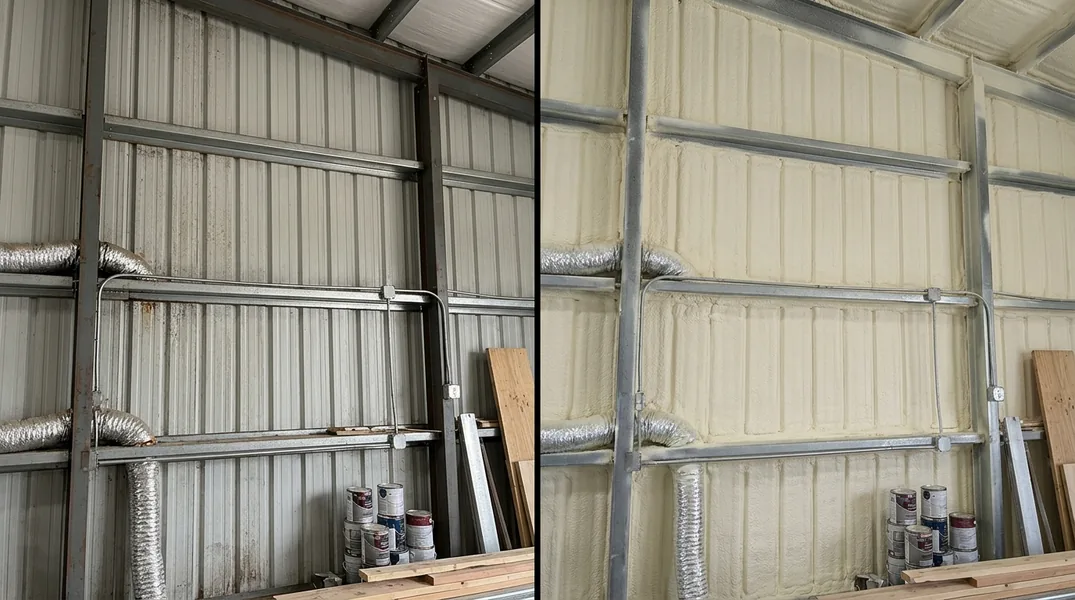
Why New Construction Homes in Bettendorf and Eldridge Need Modern Insulation
Building a new two-story home in Bettendorf or Eldridge is an exciting investment, but one decision that will impact your comfort and energy bills for decades is the insulation choice. Many homeowners and builders still rely on outdated methods like fiberglass batts or blown-in cellulose, but spray foam insulation has transformed how modern homes perform. Unlike older materials, spray foam creates a seamless air barrier that prevents drafts, reduces thermal bridging, and maintains consistent temperatures throughout your home.
The difference becomes especially clear in two-story homes, where temperature control between upper and lower levels is notoriously difficult. Traditional insulation leaves gaps around framing, electrical penetrations, and HVAC ducts. These small gaps add up to significant energy loss. New construction is the ideal time to avoid these problems entirely by choosing Attic Spray Foam Insulation during the framing stage, before drywall closes everything in. This proactive approach saves money on heating and cooling while creating a healthier indoor environment with fewer air leaks and better humidity control.
Closed Cell vs. Open Cell Spray Foam for New Construction
When planning insulation for new construction, builders and homeowners face a critical choice between two main spray foam types. Closed Cell Spray Foam Insulation offers superior performance with a higher R-value per inch (typically 6 to 7 per inch), making it ideal for two-story homes where space is premium. Closed cell foam is also moisture resistant, which is particularly valuable in attics and rim joists where moisture infiltration can compromise structural integrity. The denser composition provides excellent sound dampening, a benefit many homeowners appreciate in multi-story homes where noise travels easily between floors.
Open Cell Spray Foam Insulation is a lighter, more economical option with an R-value of about 3.5 per inch. While it requires thicker application to achieve the same thermal resistance as closed cell foam, open cell performs exceptionally well in interior walls and ceiling cavities where moisture is less of a concern. Many builders in the Davenport area choose open cell for interior applications and reserve closed cell for attics, crawlspaces, and exterior walls where maximum protection is needed. The choice ultimately depends on your budget, climate zone, and specific application within the home.
Understanding Old Insulation Removal and Why It Matters for New Builds
If your new construction project involves renovation or addition work on an existing structure, understanding old insulation removal becomes critical. Many older homes in Bettendorf and Eldridge contain outdated materials like vermiculite insulation, which poses health and safety concerns. Vermiculite insulation, commonly installed from the 1930s through the 1970s, may contain asbestos fibers that require professional remediation. Attempting DIY attic insulation removal on homes with these materials can release harmful particles into your home. Professional insulation removal ensures safe handling and proper disposal according to local regulations.
Even if your existing insulation doesn't contain hazardous materials, old fiberglass batts, cellulose, or mineral wool often have settled, compressed, or become contaminated with dust and allergens. Starting fresh with spray foam during renovation or addition work gives you the opportunity to eliminate these problems entirely. The insulation removal cost is a worthwhile investment when paired with modern spray foam installation, as you'll eliminate moisture problems, improve air sealing, and reduce future energy waste. This is especially true for two-story additions where connecting new insulation to existing systems requires careful planning and professional execution.
Spray Foam for Walls and Injection Applications in New Construction
Beyond attic insulation, new construction in Bettendorf and Eldridge benefits significantly from Wall & Injection Foam Insulation during the framing stage. When walls are open and accessible, spray foam can be applied directly into cavities, creating a complete thermal and air barrier before drywall installation. This approach eliminates the need for tape, sealant, and additional air sealing materials, streamlining the construction process while improving performance. The foam expands to fill every cavity, void, and irregular space, ensuring consistent insulation throughout the wall assembly.
For two-story homes, proper wall insulation is essential for preventing heat transfer between conditioned spaces and unconditioned areas like attics or crawlspaces. Spray foam's superior air sealing properties reduce infiltration by up to 50 percent compared to traditional fiberglass batts with drywall. This translates to lower HVAC demand, quieter operation, and more even temperatures throughout your home. If your new construction project involves complex wall configurations, rim joists, or integration with existing structures, spray foam's flexibility and performance make it the clear choice for builders and homeowners who prioritize long-term comfort and efficiency.
New Construction Spray Foam Cost and Budgeting Considerations
Understanding spray foam pricing for new construction helps you make informed decisions and allocate your building budget appropriately. The cost of spray foam insulation varies based on several factors, including the type of foam selected, the total square footage of your home, accessibility during construction, and regional labor rates. While spray foam typically costs more per square foot than fiberglass batts or blown-in cellulose, the long-term energy savings often offset the initial investment within five to ten years. For a two-story home in Davenport, the difference in monthly heating and cooling costs between spray foam and traditional insulation can range from 15 to 30 percent, depending on climate control usage and the efficiency of your HVAC system.
New construction offers the most cost-effective opportunity to install spray foam because the walls, attics, and cavities are fully accessible before drywall closes everything in. Retrofit applications in existing homes require more labor and potentially destructive wall opening, which increases insulation removal cost and overall project expense. If you're building new, incorporating spray foam during the framing stage avoids these complications and ensures optimal performance from day one. Request a free estimate from Davenport Spray Foam Insulation to understand the specific costs for your project. Call (563) 723-0564 to discuss your new construction plans with our experienced team.
Getting Started with Spray Foam Insulation for Your New Build
Planning spray foam insulation during new construction requires coordination with your builder, architect, and insulation contractor to ensure proper timing and application. The ideal window for spray foam installation is after framing is complete but before drywall, electrical rough-in, and HVAC ductwork are finalized. This sequence allows the foam to be applied directly to framing members, blocking, and rim joists without obstruction. Your contractor can then coordinate with other trades to integrate spray foam around electrical boxes, plumbing penetrations, and mechanical systems. For two-story homes in Bettendorf and Eldridge, this planning is especially important because it ensures consistent performance across both floors and prevents thermal bridging through rim joists and floor systems.
Davenport Spray Foam Insulation specializes in new construction projects and understands the unique challenges of integrating spray foam into modern building schedules. Our team works closely with builders to establish timelines, coordinate access, and deliver superior insulation performance that meets or exceeds code requirements. Whether you're planning a new two-story home, an addition, or a renovation that involves structural work, we're ready to help you select the right foam type, understand your pricing options, and execute a professional installation. Contact us today at (563) 723-0564 or visit our website to request a free estimate for your new construction project.
Looking for a professional spray foam insulation contractor in Davenport? Davenport Spray Foam Insulation responds fast for all your spray foam insulation needs.
Get a Free Quote